ServicesWater Extraction
Water Extraction in Meadowbrook
When water is sitting on your floors, every hour lets it soak deeper into pad, subfloor and drywall. We remove it with powerful extraction equipment, show you exactly where the moisture went and tell you plainly what can be saved.
What water extraction is and when you need it
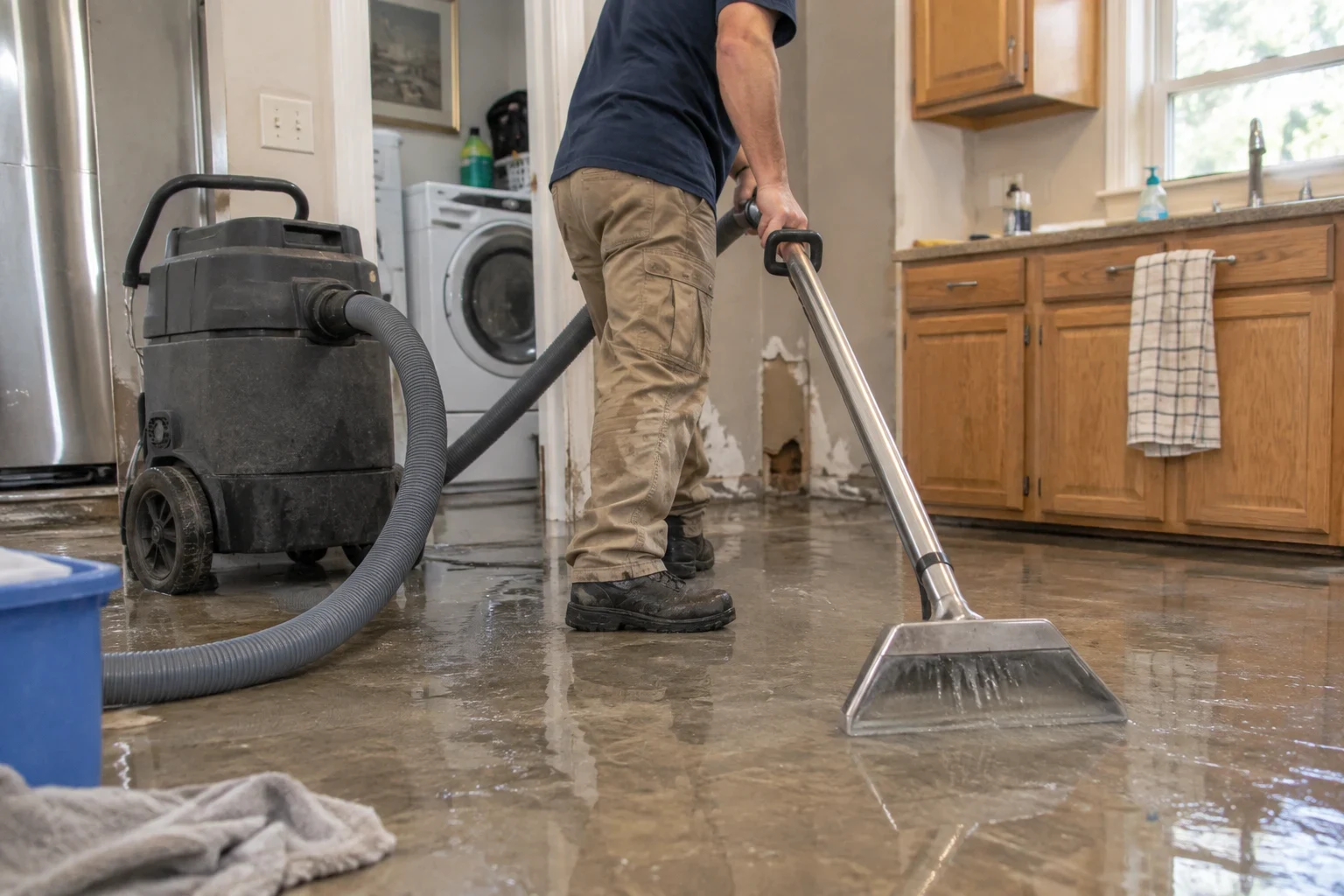
Extraction is the first job after a leak or flood: getting the liquid water out of your home before anything else. Fans and dehumidifiers cannot do this part. A wet carpet can hold far more water than any air mover will pull out in a reasonable time, so we take it out mechanically first.
It is the right call any time water is pooled on a floor, squishing out of carpet, sitting in a basement or crawl space, or still dripping through a ceiling. A burst supply line, a failed water heater, an overflowing washer and a heavy storm all start the same way. We offer it as an emergency water damage response, and we are on site in 60 mins or less.
Once the standing water is gone, the job usually moves straight into drying and dehumidifying. We will tell you if it needs to, and why.
What our extraction work includes
Finding the source first
There is no point removing water that keeps coming. We help you shut off the supply or locate the leak before we start, and note what caused it for your records.
Standing water removal
Truck-mounted and portable extractors pull water off hard floors, out of basements and from crawl spaces. Submersible pumps handle deeper water.
Carpet and pad extraction
Weighted extraction tools press down on the carpet so water is squeezed out of the pad underneath, not just the surface fibers. If the pad cannot be saved, we say so and explain why.
Moisture mapping
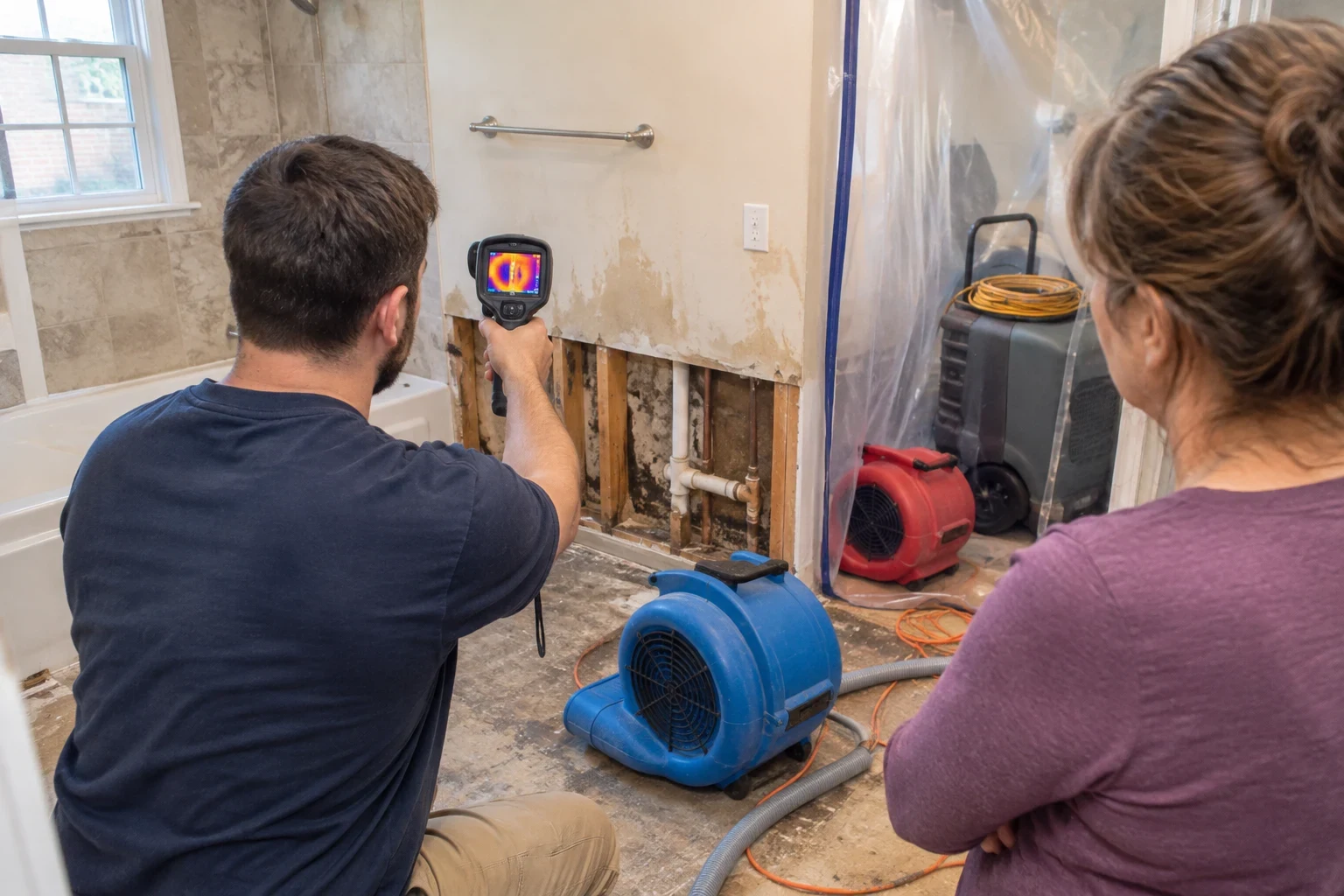
Moisture meters and a thermal camera show where water traveled under flooring, behind baseboards and into walls. You see the readings, not just our opinion.
Photos for your claim
Every wet area and every reading gets photographed as the work goes on. We work with most major insurance companies, so we know what an adjuster usually asks for and will explain it to you in plain terms.
Protecting what is dry
Furniture is moved or blocked up off wet floors, and we keep dry rooms dry while we work.
Signs you need water extracted now
- Carpet that squishes underfoot
- Water rising around your shoes means the pad below is full. No pile of towels or household wet vac can pull it back out.
- Water pooled in the basement
- Even an inch across a basement floor is a lot of water. It wicks into drywall and wood framing within hours.
- Bulging or dripping ceilings
- A sagging spot means water is collecting above it. Keep clear of it and call us before it gives way.
- Warped or lifting floors
- Cupped hardwood or loose vinyl seams mean water is underneath. It needs to come out before the subfloor is affected.
- A wet, musty crawl space
- Virginia summers are humid enough that a wet crawl space can start growing mold quickly. Removing the water early keeps that problem from starting.
How the day goes
- 1
You call, we head out
Let us know what broke or overflowed and which rooms are wet. A couple of quick questions about the source and whether the electricity is safe, and our crew is on the way.
- 2
Walk-through and straight answers
We check for safety hazards, find how far the water spread and test whether it is clean, gray or contaminated. Then we tell you what we recommend, what is likely salvageable and what the work involves before we start.
- 3
Extraction
We remove standing water and pull as much as possible from carpet, pad and porous surfaces. This step does most of the work of saving your floors.
- 4
Readings and next steps
We take moisture readings, record them with photos and explain whether drying equipment is needed and for how long. If materials like soaked drywall or pad have to go, we explain it now, not later.
What moves the cost of water extraction
We cannot give a fair number over the phone without seeing the space, but we can tell you what drives it. Once we have looked, you get a clear explanation of the work before it begins. If insurance is involved, we explain how the process usually goes.
- How much water and how far it spread
- One wet room is a smaller job than water that ran under walls into three rooms and down to the basement.
- Type of water
- Clean water from a supply line is handled differently from gray water out of a washer or contaminated floodwater. Contaminated water means more protective steps and more materials removed.
- Flooring and materials
- Carpet with pad, hardwood, laminate and tile each behave differently when wet and need different tools.
- Access
- Tight crawl spaces, finished basements and stairs add time compared with an open ground floor.
Water extraction questions
- Can I just use a shop vac and fans?
- A small puddle on tile is fine to handle yourself. Once carpet is soaked or water has touched the walls, a shop vac only skims the top and leaves the pad full. Fans on their own dry things so slowly that odor and mold often show up first.
- Will my carpet have to be thrown out?
- Not always. Carpet soaked with clean water and extracted quickly can often be saved, though the pad sometimes needs replacing. Carpet touched by sewage or floodwater usually cannot be safely kept, and we will tell you which case you are in.
- How fast can you get here?
- We are on site in 60 mins or less. Until we arrive, turn off the water supply if you can reach it, and keep everyone out of wet areas near outlets or under a sagging ceiling.
- Will insurance pay for this?
- That depends on your policy and what caused the water. We work with most major insurance companies, and we record the damage with photos and moisture readings so your claim has solid evidence behind it. We can explain the usual steps, but the coverage decision belongs to your adjuster.
- Is extraction the whole job?
- Usually it is the first step. Most homes also need drying and dehumidifying afterward, and if materials were damaged, repairs and rebuild follow. We explain which of these you need before moving on.
Water on the floor right now?
The sooner it comes out, the more of your home we can save. Call and we will come look, measure the moisture and give you a straight answer on what happens next.