ServicesDrying and Dehumidifying
Drying and Dehumidifying in Meadowbrook, VA
Once the standing water is gone, the water soaked into drywall, subfloors and framing is still there. We set air movers and dehumidifiers, measure moisture every day, and keep drying until your home reads dry, not just feels dry.
What drying actually does
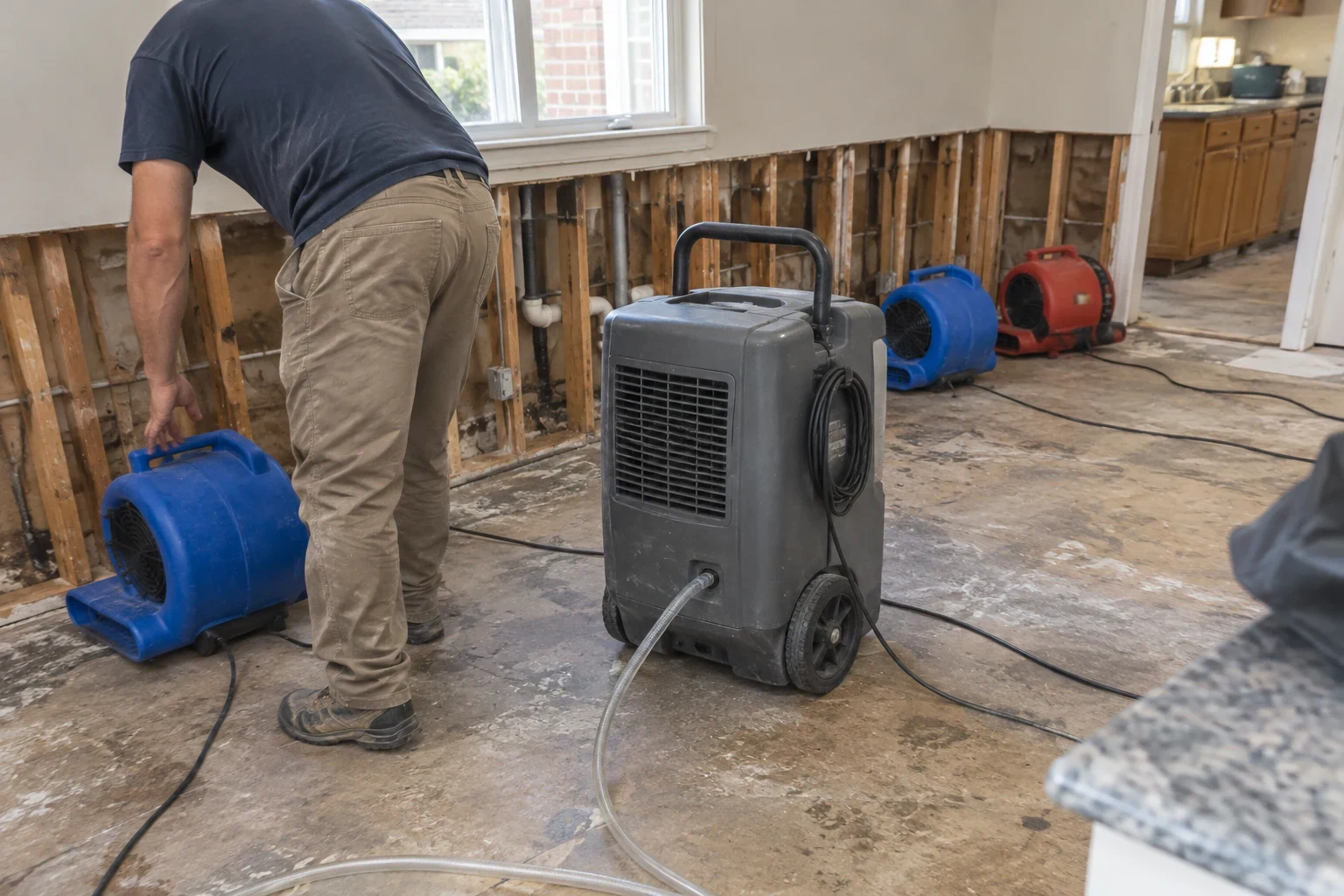
Towels and box fans handle surface water. They do not reach the bottom of a wall, the pad under carpet or the plywood under a floor. Structural drying does. We pair air movers that push moisture out of wet materials with commercial dehumidifiers that pull it out of the air, so the water leaves your home instead of settling somewhere else.
It is the right call any time water has sat on or soaked into building materials, usually right after water extraction. Wet drywall and wood can start growing mold within a day or two, and a humid Virginia summer gives it a head start.
Here is the plain answer on timing: many rooms dry in three to five days, but the readings decide, not the calendar. We tell you on the first day what we expect and update you as the numbers change.
What our drying service includes
Moisture mapping
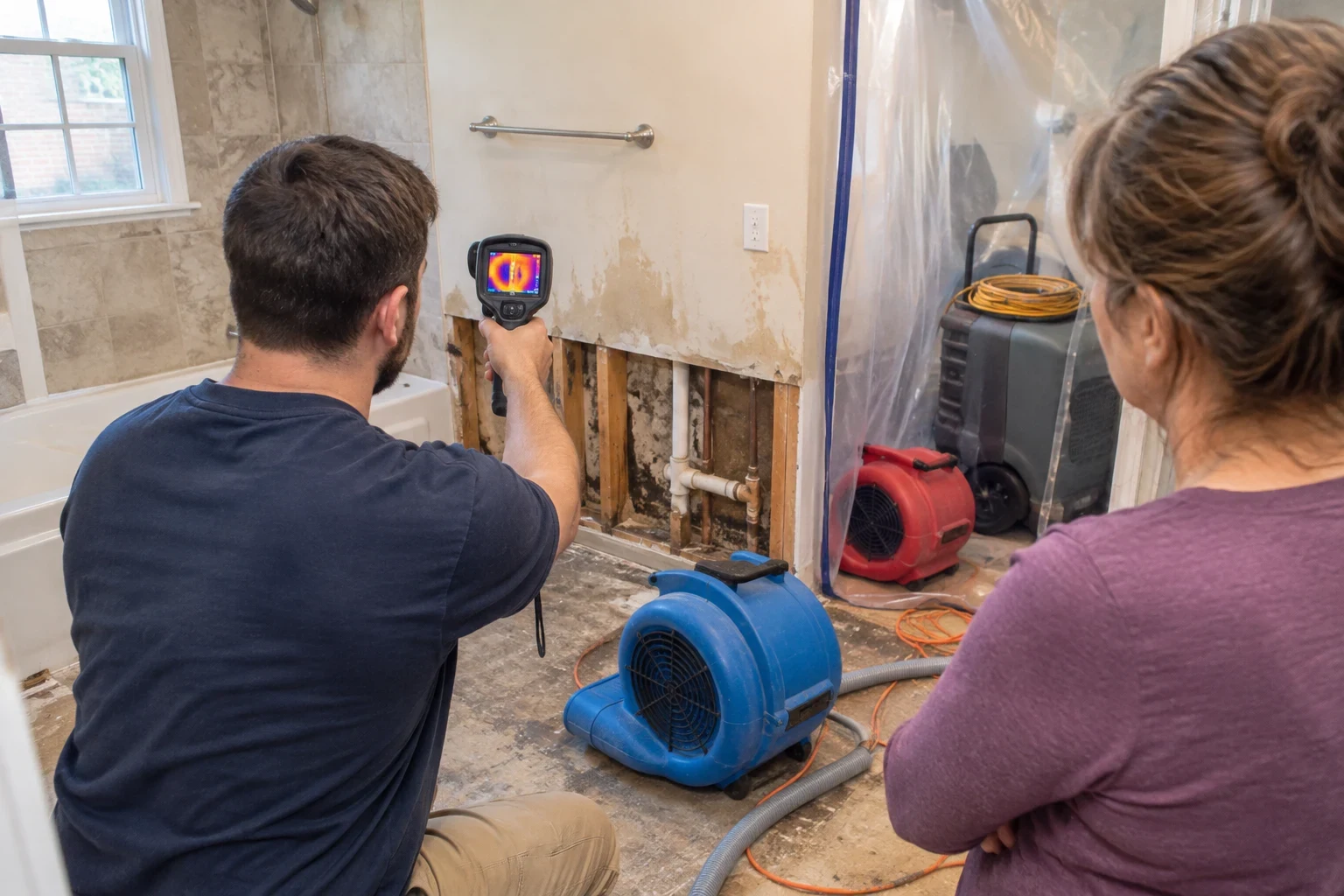
Before any equipment goes in, we check walls, floors and ceilings with moisture meters to see where the water traveled. Water wicks up drywall and runs under baseboards, so the wet area is usually bigger than the stain you can see.
Equipment sized to the job
We match the number of air movers and dehumidifiers to the square footage and how wet the materials are. Too little equipment drags the job out. Too much just runs up your power use.
Venting trapped moisture
Sometimes water hides behind a baseboard or inside a wall cavity. We may pull baseboards or drill small holes low on the wall to let air in, and we explain why before we do it.
Hardwood, subfloor and cabinet drying
Hardwood, subfloors and the space under kitchen cabinets hold water longer than open walls. We direct airflow into those spots so they dry evenly instead of cupping or swelling.
Daily readings you can see
We come back each day to take readings, log them and move or adjust equipment. You see the numbers, and the same records help your insurance adjuster if you file a claim.
A real finish line
We compare readings against a dry area of the same material elsewhere in your home. When they match, the equipment comes out.
Signs your home still needs drying
- A musty smell that lingers
- If a room still smells damp a day or two after the water is gone, moisture is still in the materials. That smell is often the first sign of mold getting started.
- Soft drywall or bubbling paint
- Press near the base of the wall. If it gives, or the paint is blistering, the gypsum is holding water.
- Floors cupping or lifting
- Wood boards with raised edges, or laminate and vinyl plank that has started to peak at the seams, are drying from the top while staying wet underneath.
- Carpet dry on top, damp below
- Carpet can feel fine while the pad and subfloor stay soaked. Pull back a corner and check.
- Water came from above
- A leak from an upstairs bathroom, water heater or roof soaks ceilings and wall cavities you cannot see. Those spaces almost never dry on their own.
How a drying job runs
- 1
We arrive and inspect
When you call, we are on site in 60 mins or less. We confirm the source is stopped, check how far the water spread and give you a free on-site inspection with a straight answer on what needs drying.
- 2
Extract, then set up
Any standing water comes out first. Then we place air movers and dehumidifiers, protect furniture and floors, and show you which cords and units to leave alone.
- 3
Check and adjust every day
Each visit we take readings, empty or reposition equipment and tell you what changed. If an area is not responding, we look for trapped water instead of just waiting longer.
- 4
Confirm dry and plan what is next
Once readings match dry reference areas, we pull the equipment and walk you through any damaged materials. If drywall, flooring or trim needs replacing, our repairs and rebuild work picks up from there.
What moves the cost of drying
Most of a drying bill comes from how many machines run and how many days they stay, so the price tracks how big and how deep the wetting is. We go over those drivers with you before anything is set up and log the equipment used each day. We work with most major insurance companies and can explain what your adjuster will likely ask to see.
- How much area got wet
- A single bathroom floor takes a handful of machines. A finished basement, or ceilings and walls across two floors, takes many more units running for more days.
- What the water soaked into
- Bare drywall gives up water quickly. Hardwood, plaster, insulation and layered subfloors hold on longer and sometimes call for specialty setups.
- Where the water came from
- When the source was clean, such as a burst pipe or a leaking fridge line, most materials can stay put while they dry. If it came from a backed-up drain or an overflowing toilet, some materials have to come out first, and that part of the work is handled as sewage cleanup.
- How long it sat
- Every day water sits, it climbs higher in the walls and sinks deeper into the floor. Calling early keeps the job smaller.
Drying and dehumidifying questions
- How long will the equipment be in my home?
- Many jobs run three to five days. Dense materials like hardwood or plaster can take longer. We go by daily moisture readings, and we will tell you each day where things stand.
- Can I just use my own fans and a store-bought dehumidifier?
- For a small spill on a hard floor, maybe. For water that soaked into walls or under flooring, household units move far less air and moisture than commercial equipment. The surface dries while the inside stays wet, which is how hidden mold starts.
- Do I need to leave while you dry?
- Most families stay home. The equipment is noisy and adds some warmth to the room, so you may want to close the door on affected areas at night. We will tell you if anything about your situation makes staying a bad idea.
- Will you have to cut my drywall?
- Not always. If the wall can be dried by venting behind the baseboard or through small holes, we try that first. If the drywall is crumbling, holds insulation that stays soaked, or got hit with contaminated water, removing it is the honest answer, and we will show you why.
- Will my insurance pay for drying?
- Sudden water damage, like a burst pipe, is often covered, while slow leaks and flood water depend on your policy. Your adjuster makes that call. We document readings and photos each day so they have what they need, and we work with most major insurance companies.
Wet walls or floors? Let's measure them.
A quick call gets someone to your home with moisture meters and a straight answer on what needs drying. The inspection is free, and we can start the same visit if you want us to.