ServicesMold Remediation
Mold Remediation in Meadowbrook
Mold always has a water problem behind it. We find that source, seal off the affected area, remove what can't be saved and clean what can. You get a clear explanation of what we found and what it will take before any work starts.
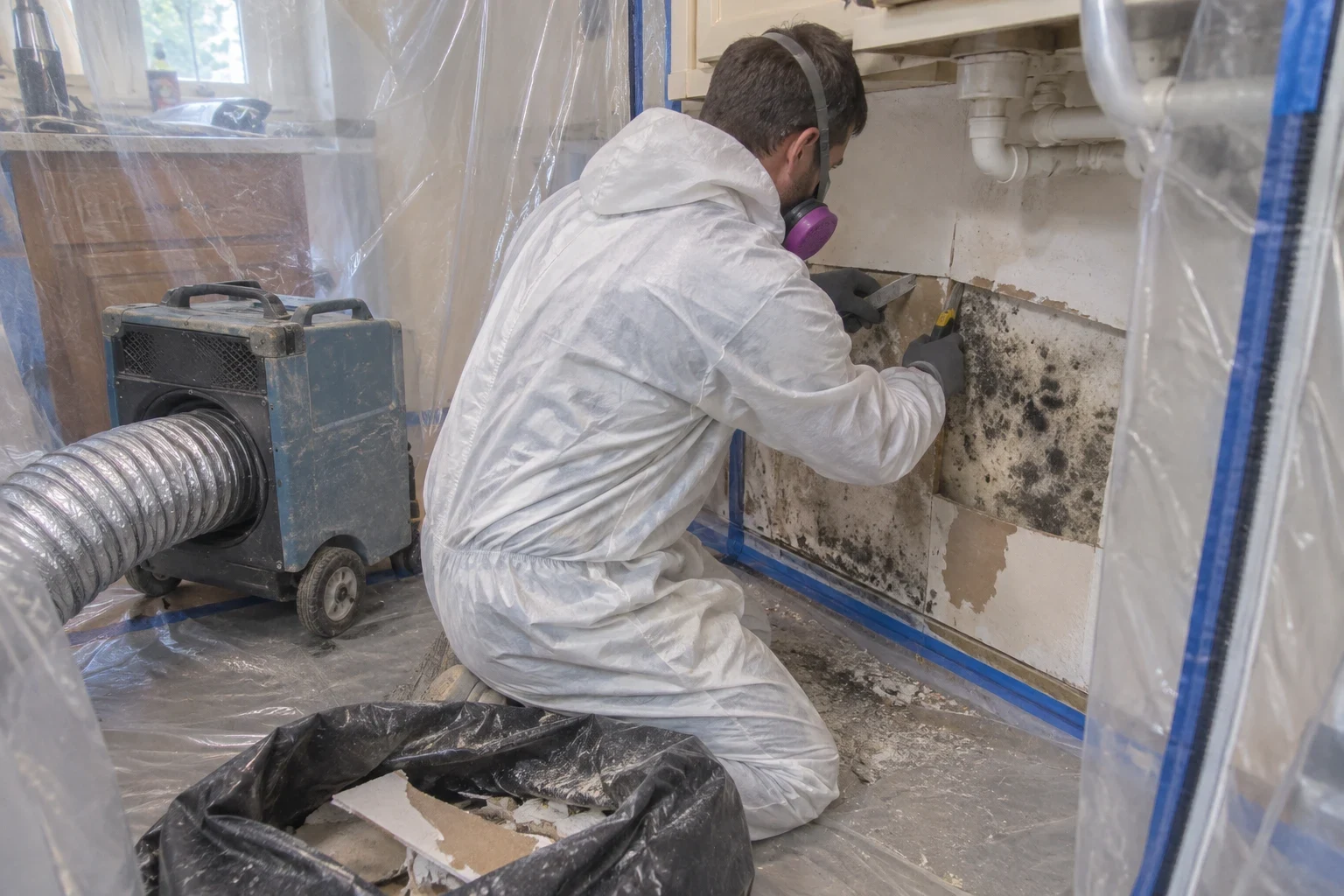
What mold remediation is, and when you need it
Mold remediation is the careful removal of mold growth and the materials it has damaged, done in a way that keeps spores from spreading to the rest of your home. It is different from wiping a spot with bleach. Mold roots into porous materials like drywall paper, carpet pad and wood framing, so surface cleaning often leaves it behind.
Mold needs moisture to grow, and it usually shows up within a few days of a leak, a wet crawl space or a slow drip nobody noticed. Humid summers make this worse, because damp air keeps materials from drying on their own. If the moisture is still there, the mold comes back. That is why every job we do starts with the cause, not just the stain.
A small patch on a bathroom wall may be something you can handle. A musty room, growth behind walls or mold that keeps returning is the point where it makes sense to have us look.
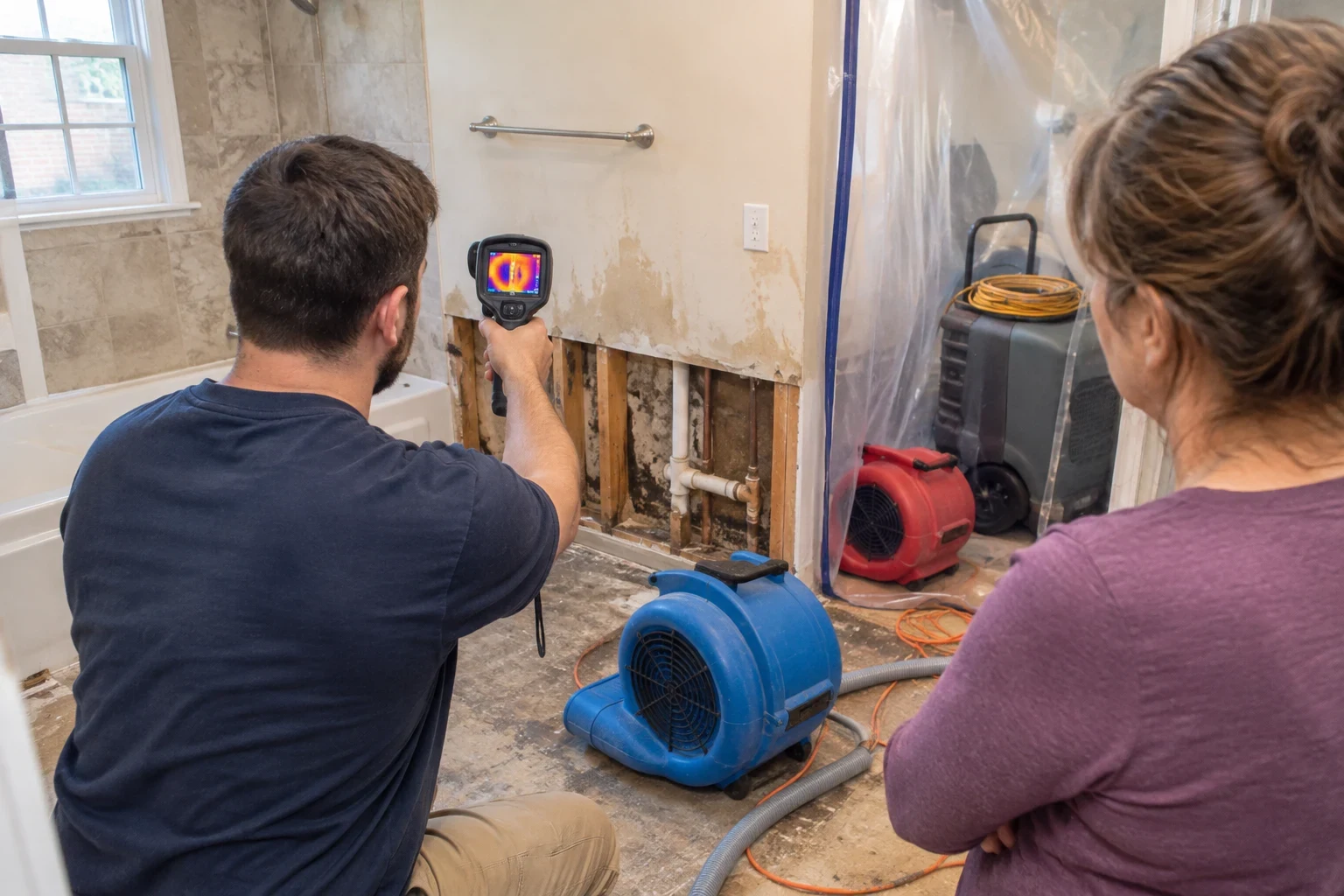
What the work includes
- 01
Moisture source check
We use moisture meters and a close look at plumbing, the crawl space and the roofline to find where the water is coming from. If the leak needs a plumber or roofer, we tell you plainly.
- 02
Containment
We seal the work area with plastic sheeting and run air scrubbers with HEPA filters under negative pressure. This keeps disturbed spores from drifting into bedrooms and living areas while we work.
- 03
Removal of damaged materials
Drywall, insulation, carpet pad and trim that mold has grown into are cut out and bagged inside the containment. We remove only what is affected and show you why each piece has to go.
- 04
Cleaning and treatment
Framing, subfloor and other solid materials that can be saved are HEPA vacuumed, scrubbed and treated with an antimicrobial.
- 05
Drying the structure
Before anything is closed up, we bring the materials back to normal moisture levels with dehumidifiers and air movers. Our drying and dehumidifying service covers this step in more detail.
- 06
Photos and notes for you
You get photos of what we found and what we removed. They are useful for your records and for an insurance claim if one applies.
Questions about Mold Remediation?
Call(804) 701-5848Signs it's time to call about mold
A musty smell that won't clear
An earthy, stale odor in a room, closet or basement usually means growth you can't see yet. Airing the room out helps for a day, then it returns.
Spots that come back
If you've cleaned black, green or gray spots and they reappear in the same place, the moisture behind them is still there.
Stains after a leak
Yellow or brown rings on ceilings or walls, or bubbling paint, mean water got into the material. Mold often follows within a couple of days.
Damp crawl space or basement
Fuzzy growth on floor joists, condensation on ducts or a constantly humid lower level are common starting points for mold under your home.
Water damage that wasn't dried properly
If a past leak or flood was only mopped up, the walls and floor may have stayed wet inside. That hidden moisture is where mold takes hold.
How a mold job runs
- 1
Inspection and straight answer
We walk the area with you, take moisture readings and check where the water came from. Then we tell you what we see, what needs removal and what doesn't.
- 2
Written scope before work
You get a written, line-item estimate so you know what is being removed and why. Nothing is cut out until you've agreed to it.
- 3
Contain, remove and clean
We set up containment, run air scrubbers, take out damaged materials and clean the remaining surfaces. Floors and paths through your home are covered to keep debris contained.
- 4
Dry, verify and close out
We dry the area and recheck moisture levels before calling it done. Once the space is clean and dry, our repairs and rebuild crew can replace drywall, insulation and trim.
What affects the cost of mold remediation
Mold jobs vary a lot, so we price each one after we've seen it. The biggest drivers are how far the growth has spread and what it has grown into. We work with most major insurance companies, and we'll explain what is typically covered, though the adjuster makes that call.
- Size of the affected area
- A single wall cavity takes far less containment, labor and disposal than a full basement or several rooms.
- Materials involved
- Mold on solid wood framing can often be cleaned. Mold in drywall, insulation or carpet means those materials come out and get replaced.
- Access
- Tight crawl spaces, attics and areas behind cabinets or tubs take more time to reach and contain safely.
- The moisture source
- If an active leak or ongoing humidity problem is feeding the growth, it has to be addressed first, and drying time adds to the job.
- Rebuild needs
- Replacing drywall, paint, flooring or trim after removal is a separate line on your estimate so you can see it clearly.
Mold remediation questions
Can I just clean the mold with bleach?
On a hard, non-porous surface like tile, a small spot can be cleaned. On drywall or wood, bleach mostly lightens the color and leaves roots behind, and the water in it can feed regrowth. If the area is larger than a small patch or keeps returning, it needs proper removal.
Is mold covered by homeowners insurance?
It depends on the cause. Mold from a sudden event like a burst pipe is more often covered than mold from a long, slow leak or ongoing humidity. We document what we find and can talk through the claim process with you, but the adjuster decides coverage.
Will you have to tear out my walls?
Only where mold has grown into the material. We use moisture readings and inspection to find the edges of the damage, then remove that section rather than a whole room. You'll see exactly what is coming out before we start.
Can we stay in the house during the work?
In most cases, yes. Containment and air scrubbers keep the work area sealed off from the rest of your home. If someone in the household has asthma or a weakened immune system, we'll talk about whether staying elsewhere for a day or two makes sense.
How long does mold remediation take?
A small, contained area can be finished in a day or two. Larger jobs with drying time can take several days before rebuild begins. We give you a realistic timeline after the inspection.
What happens after I call about fresh water damage?
Once you hang up, our crew is on site in 60 mins or less. Speed matters most when the mold risk comes from a new leak, because drying things out early keeps the affected area smaller and the job simpler.
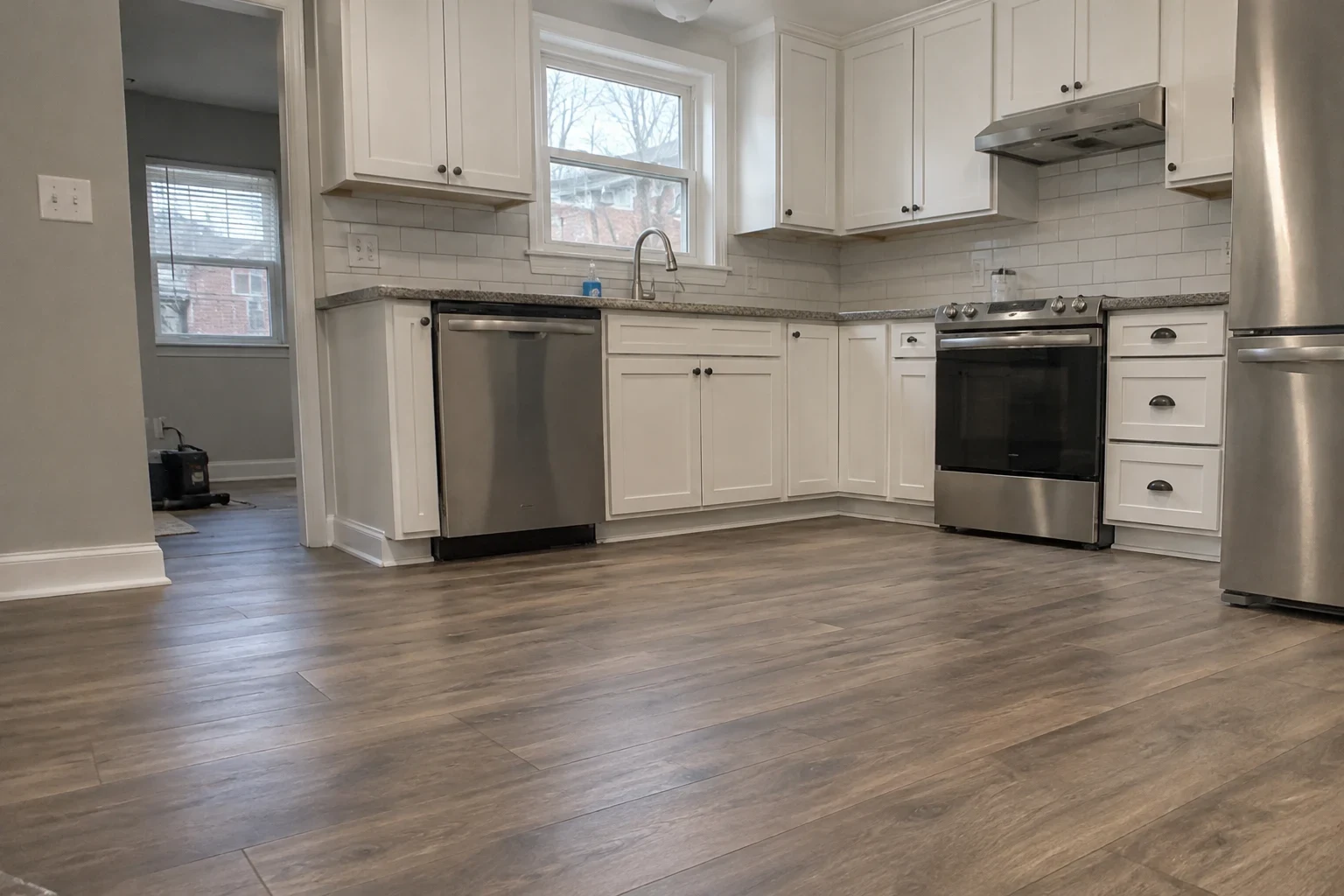
Get a clear answer about the mold in your home
We'll find what's feeding it, show you what needs to go and explain the cost before any work begins. We serve Meadowbrook and nearby towns including Chester, Bon Air and Richmond.