ServicesRepairs and Rebuild
Repairs and Rebuild in Meadowbrook
Once the water is out and the structure is dry, the next question is how your home gets back to normal. We replace the drywall, flooring, cabinets and trim that had to come out, and we tell you plainly what needs replacing and what can stay.
Putting Your Home Back Together
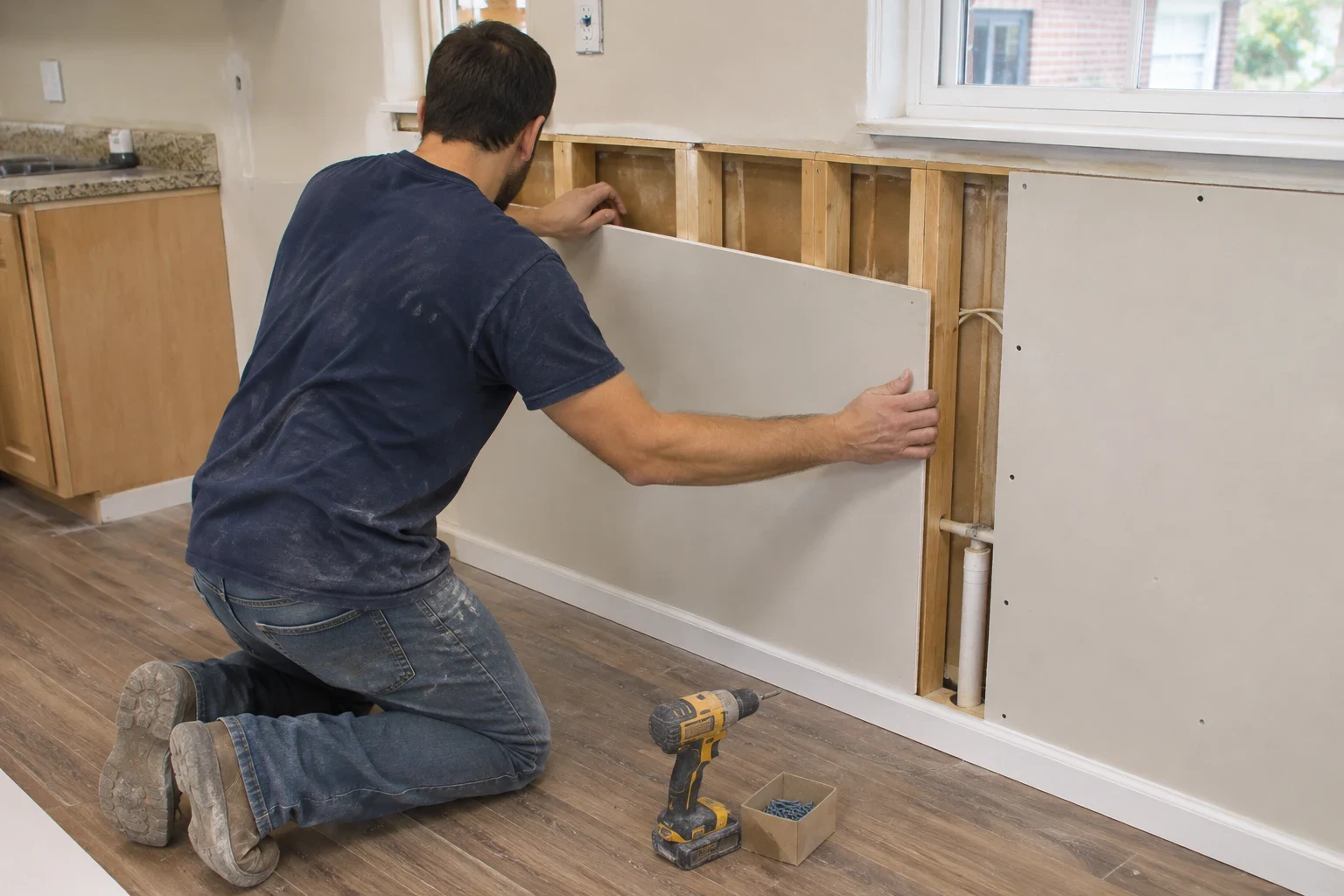
Repairs and rebuild is the last stage of a water loss. During water extraction and drying, wet materials often have to be cut out so the framing behind them can dry. That leaves open walls, bare subfloor and missing baseboards. This service closes all of that back up.
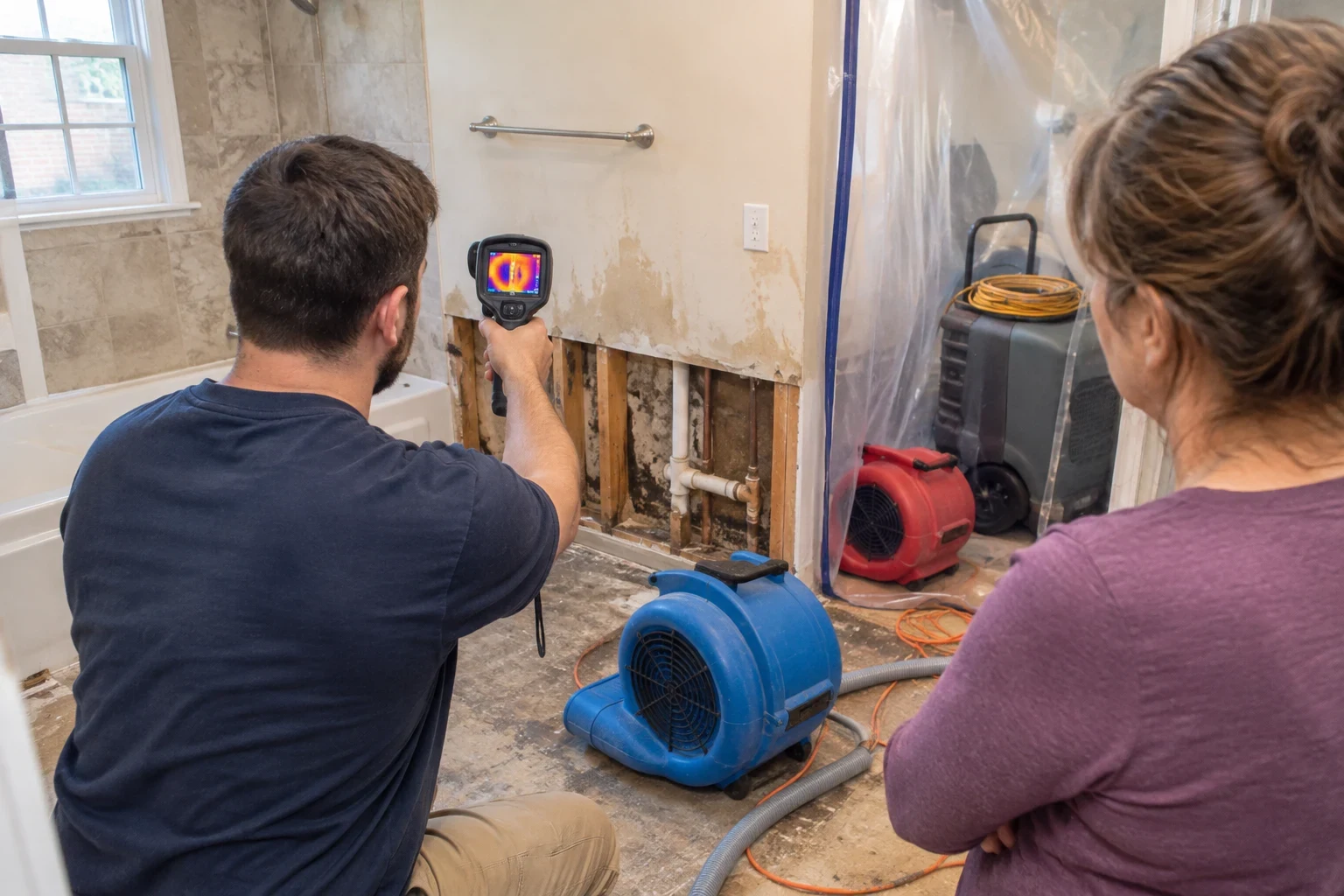
We only start rebuilding after moisture readings show the framing and subfloor are dry. Closing a wall over damp studs is how mold remediation jobs get started months later, so we don't skip that check.
Because the same company that dried your home also rebuilds it, nobody has to guess what was removed or why. You deal with one crew and one written scope from start to finish.
What the Rebuild Covers
- 01
Drywall and insulation
Wet drywall is usually cut out in a straight line a couple of feet above the waterline. We hang new board, replace soaked insulation, then tape, mud and match the wall texture so the patch doesn't show.
- 02
Flooring and subfloor
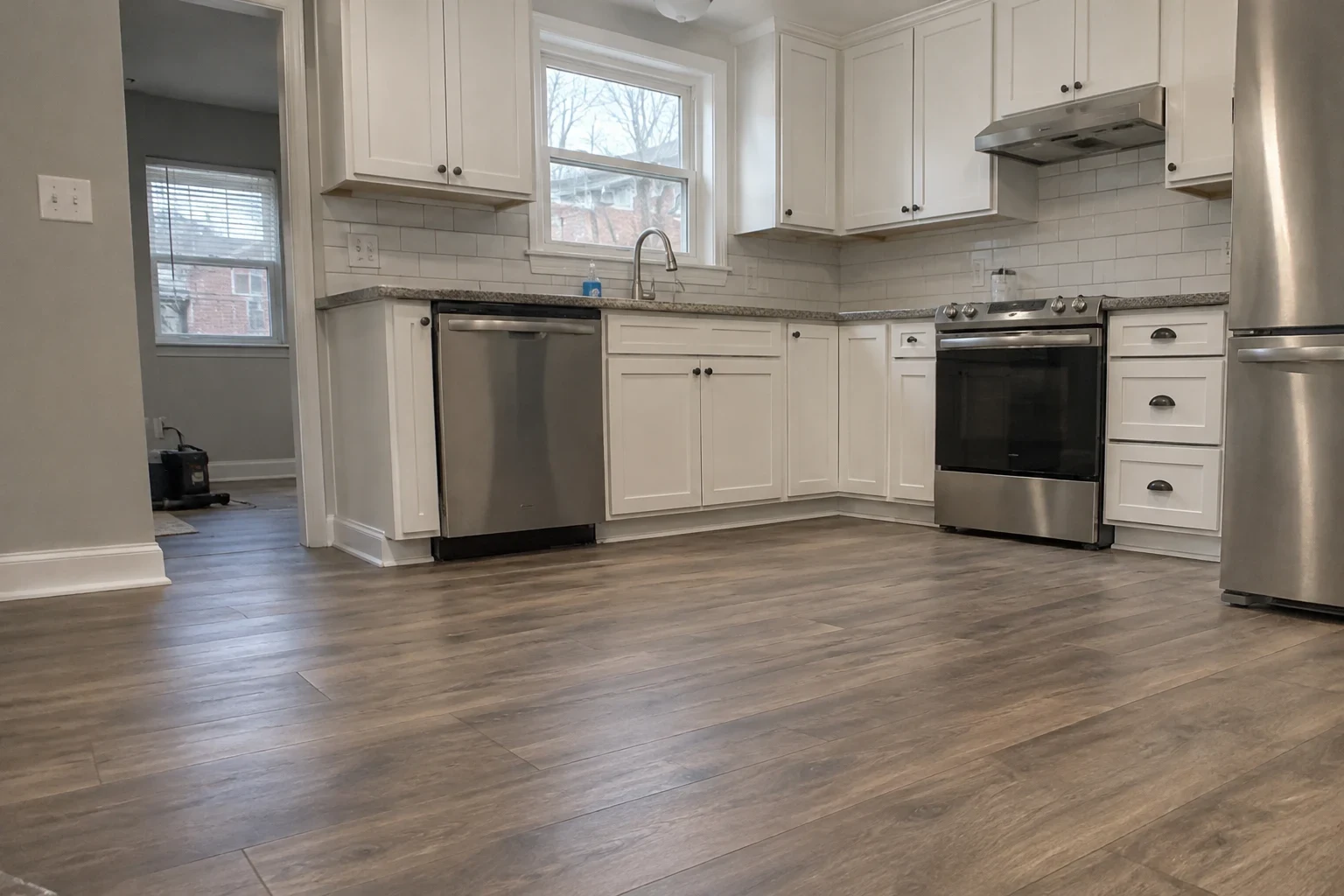
Carpet pad rarely survives a soaking, and laminate tends to swell at the seams. We replace what failed, check the subfloor underneath and swap out any sections that delaminated or softened.
- 03
Cabinets and vanities
Most base cabinets are made of particleboard, which swells and crumbles once it absorbs water. We remove damaged boxes and install replacements, protecting countertops whenever they can be reused.
- 04
Trim, doors and paint
Baseboards, door casings and hollow-core doors often warp at the bottom. We replace them, then prime and paint the repaired rooms so they match the rest of your home.
- 05
Permits when the work needs them
Some rebuilds involve work that requires a permit and inspection. When yours does, we handle that step with the county so you aren't left sorting it out alone.
Questions about Repairs and Rebuild?
Call(804) 701-5848Signs Your Home Needs Repair Work
Walls were opened during drying
If drywall was cut or baseboards were pulled so air could reach the framing, those gaps need new material to close them up.
Floors give or rise underfoot
When part of the floor sinks a little as you step on it, or the edges of boards have peaked, the flooring or subfloor took on water. Those materials won't settle back flat on their own.
Cabinet bottoms are swollen
Particleboard that has bubbled or started crumbling near the toe kick stays that way after drying. It needs to be replaced.
Stains or peeling paint remain
Tide lines on walls, brown rings on the ceiling and flaking paint mark where moisture sat. After we confirm the area is dry, we repair the damaged surface properly rather than painting over it.
How a Rebuild Runs
- 1
Walk-through and moisture check
We go room by room, take moisture readings and photograph the damage. Then we give you an honest answer on what has to be replaced and what can be saved.
- 2
Written line-item scope
Every repair goes on paper with its materials listed, so you and your insurer are looking at the same details. We work with most major insurance companies. We're glad to explain what typically happens with a claim like yours, but coverage decisions stay with your adjuster.
- 3
Protecting the rest of your home
Before work begins, we lay floor protection along walkways and hang plastic around the work area to keep drywall dust out of the rooms you're using.
- 4
Rebuild and finish
Insulation goes in first, then drywall, flooring, cabinets, trim and paint. We clean up at the end of every work day.
- 5
Final walk-through
We go through the finished rooms with you and correct anything that doesn't look right before we call the job done.
What Moves the Cost of Repairs
No two rebuilds cost the same because no two water losses leave the same damage behind. The price comes down to how much was removed and what goes back in. We break that down line by line in your written scope, so there's nothing to decode later.
- How much was removed
- A two-foot cut along one wall is a small job. A finished basement opened up on every side is a much bigger one.
- Materials you're matching
- Matching hardwood, tile or a specific cabinet line takes more time and cost than standard drywall and carpet. If an exact match isn't available, we'll tell you your options.
- What we find underneath
- Rotted subfloor, damaged framing or old work that wasn't done to code can add scope once walls are open. We show you photos before anything changes.
- Permits and inspections
- Work that requires a permit adds fees and inspection time to the schedule.
Repairs and Rebuild Questions
Can you start rebuilding right after the water is cleaned up?
Not until everything is dry. Drying usually takes several days, and we check the framing and subfloor with a moisture meter before any wall or floor gets closed in. Building over damp materials traps moisture and can lead to mold.
Will my insurance pay for the rebuild?
That comes down to your policy and what caused the water. A sudden event like a burst supply line is often covered. A slow leak or water coming in from outside often is not. We work with most major insurance companies. We send them an itemized scope they can review line by line, and your adjuster decides what the policy pays for.
Do I have to move out during repairs?
Most homeowners stay in their homes. We seal off the work area and keep a clear path through the house. If your kitchen or only bathroom will be out of use for a stretch, we tell you early so you can plan around it.
Can you match my existing flooring or cabinets?
Often, yes. We bring samples to hold up against what you have. When an exact match isn't out there, we lay out your choices, such as replacing the flooring across a whole room so it looks even.
How fast can you get to my home?
When water is still coming in, our initial response is on site in 60 mins or less in Meadowbrook and nearby towns like Chester and Bon Air. Rebuild work gets scheduled after the drying is finished and confirmed.
Ready to Close Up the Walls?
Tell us what happened and what's been removed so far. We'll come out, check that everything is dry and walk you through what the repair involves.